
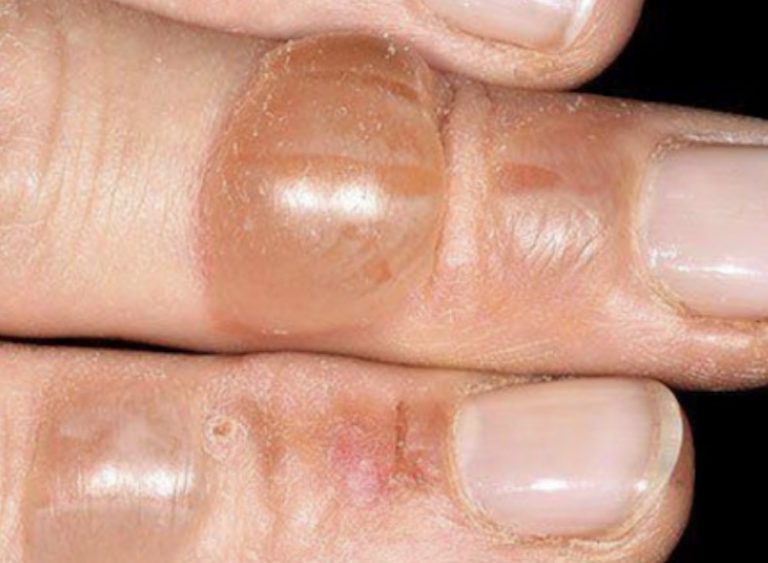
Tiny Blisters on Your Fingers? These Symptoms Should Never Be Ignored
Have you ever noticed a few tiny bumps on your fingers and thought, What on earth is that?
Maybe they started as little itchy spots. Then, a day or two later, they looked more like tiny fluid-filled blisters. Sometimes they disappear on their own. Other times, they itch, burn, crack, or seem to keep coming back.
Occasional skin irritation on the hands is incredibly common. Dry weather, frequent handwashing, cleaning products, soaps, and contact with irritating materials can all leave your skin feeling rough or uncomfortable.
But repeated tiny blisters on your fingers, palms, or hands are worth paying attention to.
One possible cause is dyshidrotic eczema, a condition known for intensely itchy, small blisters. But it isn’t the only possibility. Allergic contact dermatitis, infections, and other skin conditions can sometimes produce similar-looking changes.
That’s why the appearance of the blisters is only part of the story.
Where they appear, how they feel, how quickly they develop, whether they keep returning, and whether you have other symptoms can all provide important clues.
What Can Cause Tiny Blisters on the Fingers?
Small blisters on the hands can have several possible causes.
Some are relatively common and manageable at home with appropriate skin care. Others may require evaluation and prescription treatment.
Possible causes include:
Dyshidrotic eczema
Allergic contact dermatitis
Irritant contact dermatitis
Certain viral infections
Other inflammatory skin conditions
Less common autoimmune or systemic conditions
Because several conditions can look alike, it’s difficult to determine the cause from appearance alone.
Let’s look at some of the most common possibilities.
Dyshidrotic Eczema: A Common Cause of Tiny Itchy Blisters
One of the conditions most strongly associated with tiny fluid-filled blisters on the hands is dyshidrotic eczema, also called pompholyx.
It commonly produces small, intensely itchy blisters on:
The sides of the fingers
The palms
The sides or soles of the feet
The blisters can be extremely small, sometimes resembling tiny beads beneath the skin.
And the itching can be surprisingly intense.
After the blisters dry out, the affected skin may become dry, flaky, cracked, or tender.
What Triggers Dyshidrotic Eczema?
The exact cause isn’t always clear.
However, flare-ups can be associated with factors such as:
Stress
Sweating
Skin irritation
Certain allergies
Sensitivity to particular metals
Heat or environmental changes
Not everyone has the same triggers, which can make recurring outbreaks frustrating.
You may notice that your hands flare after a particularly stressful period, during hot weather, or after repeated exposure to a substance that irritates your skin.
Allergic Contact Dermatitis Can Look Similar
Another possibility is allergic contact dermatitis.
This occurs when the skin develops an allergic reaction after contact with a particular substance.
And here’s the tricky part: the culprit isn’t always obvious.
Potential triggers around the home or workplace can include:
Soaps
Detergents
Cosmetics
Fragrances
Jewelry
Certain metals
Latex-containing products
Other chemicals or materials
Symptoms can include redness, itching, swelling, and small blisters.
Why Is It Sometimes Hard to Identify the Trigger?
Why Is It Sometimes Hard to Identify the Trigger?
An allergic reaction doesn’t necessarily appear immediately after exposure.
You may use the same product repeatedly without thinking about it, only to eventually develop a rash.
That can make it difficult to connect the skin reaction with the substance responsible.
If the same type of rash repeatedly appears after using a particular product or wearing a particular item, that’s a clue worth discussing with a healthcare professional.
Irritant Contact Dermatitis Is Another Possibility
Not every contact-related rash is an allergy.
Irritant contact dermatitis occurs when something directly damages or irritates the skin.
Frequent exposure to water, soaps, detergents, cleaning products, solvents, or other irritating substances can contribute to hand irritation.
This is particularly relevant if your hands are repeatedly exposed to cleaning products or if you’re washing them very frequently.
The skin may become:
Dry
Red
Sore
Cracked
Itchy
Burning or stinging
In some cases, small bumps or blister-like areas can develop.
Could an Infection Cause Blisters?
Yes, certain infections can cause blister-like lesions.
Some viral infections, for example, can produce clusters of painful blisters or lesions.
This is one reason pain and other accompanying symptoms matter.
A cluster of painful lesions accompanied by fever or other signs of illness deserves more attention than a couple of mildly itchy bumps that quickly disappear.
The specific treatment depends entirely on the cause. Viral, bacterial, and fungal infections are treated differently, so guessing based on appearance can lead you in the wrong direction.
When Tiny Blisters Should Concern You
A few small itchy blisters aren’t necessarily an emergency.
But there are situations where you shouldn’t simply wait and see.
Pay particular attention if the blisters:
Keep coming back
Spread quickly
Become increasingly painful
Are accompanied by significant swelling
Produce pus or drainage
Occur with fever
Cause extensive skin cracking
Interfere with normal daily activities
Don’t improve over time
Appear alongside other unexplained symptoms
These signs don’t automatically mean something serious is happening, but they make professional evaluation more important.
What If the Blisters Are Extremely Itchy?
Intense itching is a common feature of several inflammatory skin conditions, including dyshidrotic eczema.
Unfortunately, scratching can create another problem.
Once the skin breaks open, bacteria can enter more easily.
That can potentially lead to a secondary skin infection.
So as tempting as it may be, try not to scratch, squeeze, or pick at the blisters.
Instead, focus on protecting the skin and avoiding anything that appears to make the irritation worse.
Why Scratching Can Make Things Worse
There’s a frustrating cycle that can happen with itchy skin:
Itch → scratch → damaged skin → more irritation.
Repeated scratching can cause cracks and open areas, leaving the skin more vulnerable to infection.
It can also prolong irritation and make the affected area more painful.
Keeping fingernails short, protecting irritated skin, and avoiding known irritants can help reduce the temptation to scratch.
If itching is severe or persistent, a healthcare professional can recommend appropriate treatment.
What Should You Do When You First Notice the Blisters?
Your first instinct might be to pop them.
Don’t.
Instead, take a moment to observe what’s happening.
Look at the Location
Are the blisters:
Along the sides of your fingers?
On your palms?
On the backs of your hands?
Around your nails?
Spreading elsewhere?
The location can provide useful information to a clinician.
Think About Recent Exposures
Ask yourself whether you’ve recently:
Changed soaps
Started using a new detergent
Worn new jewelry
Used a different cosmetic
Handled cleaning chemicals
Worn latex gloves
Spent more time with your hands in water
You may discover a potential trigger.
Pay Attention to Other Symptoms
Notice whether the area is itchy, painful, burning, swollen, or warm.
Also take note of fever, spreading redness, drainage, or other symptoms.
These details can help a healthcare professional determine what may be happening.
Simple Skin-Care Habits That May Help
While the appropriate treatment depends on the underlying cause, gentle skin care is generally a sensible approach.
Use Gentle Cleansers
Avoid unnecessarily harsh soaps or cleansers if your hands are already irritated.
Moisturize Regularly
A suitable moisturizer can help support the skin barrier, particularly when dryness and cracking are contributing to irritation.
Protect Your Hands
If you’re handling cleaning products or other irritants, use appropriate protective gloves.
Just remember that gloves themselves can sometimes trigger irritation or allergy, so pay attention to whether symptoms worsen with a particular glove material.
Avoid Picking and Scratching
This can help reduce additional skin damage.
Think About Your Triggers
If outbreaks repeatedly occur, keeping track of products, activities, weather, stress, and other changes may help you identify a pattern.
How Are Tiny Hand Blisters Diagnosed?
A healthcare professional will generally begin by examining the affected skin and asking about your symptoms and medical history.
They may want to know:
When the blisters first appeared
Whether they’ve happened before
How quickly they developed
Whether they itch or hurt
Whether they are spreading
What products you’ve recently used
Whether you’ve had similar rashes elsewhere
Whether you have other symptoms
Depending on what they see, additional testing may sometimes be appropriate.
A dermatologist may be particularly helpful when the diagnosis is unclear, the condition keeps returning, or symptoms aren’t responding to initial treatment.
Why Self-Diagnosis Can Be Tricky
This is one of those situations where a quick internet search can be both useful and misleading.
A photograph of a rash may resemble several completely different conditions.
For example, eczema and contact dermatitis can both produce itching and inflammation. Certain infections can also cause blister-like lesions.
The treatment that helps one condition may do little—or potentially make another condition worse.
So rather than trying to match your hands to a picture online, use online information as a reason to ask better questions of your healthcare provider.
How Are Tiny Blisters Treated?
Treatment depends on what’s causing them.
If It’s Eczema
Treatment may focus on restoring the skin barrier, reducing inflammation, controlling itching, and avoiding triggers. Depending on the severity, a clinician may recommend moisturizers and topical medications.
If It’s Allergic Contact Dermatitis
Identifying and avoiding the triggering substance is an important part of management.
A healthcare professional may also recommend treatment to calm the inflammation.
If It’s an Infection
The treatment depends on the specific organism involved.
Some infections may require prescription antiviral, antifungal, or antibiotic medication.
That’s precisely why identifying the cause matters.
When Should You See a Doctor?
Consider making an appointment if the blisters:
Continue appearing
Keep returning
Are unusually painful
Become increasingly inflamed
Spread to other areas
Interfere with work or daily activities
Don’t improve with gentle skin care
Are accompanied by other unexplained symptoms
You should also seek medical advice sooner if you have a weakened immune system, diabetes, or another condition that may increase your risk from skin infections or complicate healing.
When Is Urgent Medical Attention Appropriate?
Some symptoms deserve more immediate attention.
Seek prompt medical care if you develop rapidly worsening swelling, severe pain, rapidly spreading redness, significant drainage or pus, fever with a worsening skin lesion, or other signs of a potentially serious infection.
If you’re unsure how urgent your symptoms are, contacting a healthcare professional or appropriate medical service is safer than relying on an online diagnosis.
Frequently Asked Questions
Are tiny blisters on the fingers always eczema?
No. Dyshidrotic eczema is one possible cause, but contact dermatitis, infections, and other skin conditions can produce similar symptoms.
Why are the blisters so itchy?
Tiny blisters associated with conditions such as dyshidrotic eczema can cause intense itching. However, itching can occur with several types of skin inflammation.
Should I pop the blisters?
It’s generally better not to intentionally pop or pick at them. Breaking the skin can increase irritation and create an opening through which bacteria can enter.
Can stress cause tiny blisters on the hands?
Stress can be associated with flare-ups of some skin conditions, including dyshidrotic eczema. It isn’t necessarily the only cause, though.
Can cleaning products cause hand blisters?
Yes. Certain cleaning products and chemicals can irritate the skin or trigger allergic contact dermatitis.
Are hand blisters contagious?
That depends on the cause. Some skin conditions, such as eczema and contact dermatitis, aren’t contagious, while certain infections can be. That’s another reason an unexplained blistering rash shouldn’t automatically be assumed to be eczema.
Can I treat tiny blisters at home?
Mild irritation may improve with gentle skin care, avoiding suspected irritants, and regular moisturizing. Persistent, worsening, painful, or unexplained blistering should be evaluated by a healthcare professional.
What if the blisters keep coming back?
Recurring outbreaks are worth discussing with a clinician or dermatologist. A repeated pattern may help identify a trigger or underlying skin condition.
The Bottom Line
Tiny blisters on your fingers may look like a minor annoyance, but recurring or unexplained blisters deserve a closer look.
Dyshidrotic eczema is one common possibility, particularly when the blisters are tiny and intensely itchy. But allergic or irritant contact dermatitis, infections, and other conditions can sometimes look similar.
The most useful clues aren’t just what the blisters look like.
Pay attention to where they appear, how they feel, how long they last, what triggers them, and whether they’re accompanied by pain, swelling, fever, spreading redness, or drainage.
And remember: you don’t have to figure out the diagnosis yourself.
If your hands keep sending you the same unusual signal, especially if symptoms are worsening or interfering with everyday life, getting professional advice can help identify the cause and get the appropriate treatment sooner.
A Note About Your Health
This article is for general educational purposes and isn’t a substitute for professional medical advice, diagnosis, or treatment. Skin conditions can look remarkably similar, and an in-person evaluation may be necessary to determine the cause of persistent or unusual blisters. If you develop severe or rapidly worsening symptoms, seek prompt medical care.