
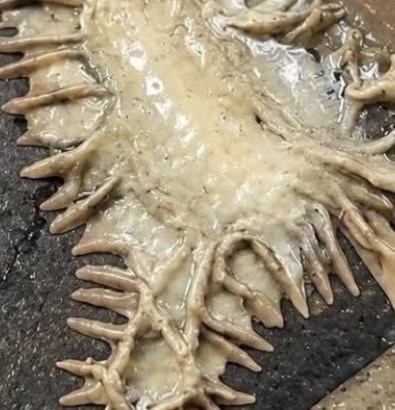
The unusual pale yellow, branching growth in the image may be a slime mold in its plasmodium stage. Although it can look like a strange fungus, foam, or even something from another world, slime molds are remarkable organisms that can spread across damp surfaces in branching, vein-like patterns. They are often found where moisture and decaying organic material are present.
The star-like appearance can develop as the soft, living mass spreads outward. Slime molds can change shape dramatically, forming blobs, networks, fans, and branching structures. Their appearance may also change as they mature and eventually produce reproductive structures containing spores.
One of the most fascinating characteristics of slime molds is that the visible mass, called a plasmodium, can move and search for food. This amoeba-like stage feeds by engulfing microorganisms and other tiny food sources. Moist conditions strongly favor its activity, which helps explain why such growths may suddenly appear on wet ground, mulch, wood, or other damp surfaces.
The exact species cannot be confirmed from this photograph alone, but its unusual branching and slimy appearance are consistent with the diverse forms that slime molds can produce. Scientists have documented yellow and cream-colored plasmodia in several slime-mold groups, including species within Physarum.
In most situations, discovering a slime mold is more of a fascinating natural observation than a reason for alarm. Its strange shape and rapid changes make it a reminder that the natural world is full of organisms that do not always fit our usual expectations of what a plant, animal, or fungus should look like.